Yoga for Flu and Cough: 8 Poses to Soothe a Dry Cough and Open Your Airways

Practicing yoga for flu and cough can be a powerful way to support your body’s natural healing process. I’ve always claimed to be the best at being sick—odd as that sounds. But here’s my secret: when a cold or flu strikes, I listen to my body and rest completely.

Some people try to power through, hoping to outlast the illness. Not me. I’m no hero. I go straight to bed. Rest is what your body demands, and honoring that is the first step in any healing process. Animals do it instinctively. They sleep, fast, and recover—why should we be any different?

Start with Rest, Then Gently Reintroduce Movement

When your energy begins to return, it’s time to reintroduce gentle movement. That’s when yoga for flu and cough becomes a vital tool. Simple asanas can:

  • Open up blocked areas like the chest, lungs, and sinuses
  • Stimulate circulation to help break up congestion
  • Calm the nervous system and reduce head tension

A quick tip: If you’re battling a sinus headache, try this! Add a drop of peppermint essential oil to your palm, rub your hands together, cup your nose, and take three deep inhales. Then gently massage your temples and the back of your neck. It’s intense, but it works wonders—often faster than over-the-counter meds.

A Restorative Sequence: Yoga for Flu and Cough Recovery

This article introduces a restorative yoga sequence specifically designed for those dealing with flu or cough symptoms. The goal of this yoga for flu and cough practice is to:

  • Gently expand the lungs and chest
  • Release pressure and tension
  • Encourage drainage of mucus and improve respiratory function

Infographic: 8 Yoga Poses For Cold & Dry Cough

yoga for cold and dry cough    yoga for flu and cough

Mountain Pose – Tadasana

Start standing with the feet parallel to one another. Ground down through all four corners of the feet and open up the chest and close the eyes. Activate the thighs by lifting up through the kneecaps, draw the lower belly in and drop the tailbone down. Gently draw the chin back towards the centreline of the body to lengthen the back of the neck and relax the shoulders down. Use this simple standing pose to become aware of the body. Take full breaths in and ground down into the feet. To an outside observer, it doesn’t look like there is much going on in this standing posture, but there are so many micro movements that you can engage to turn on the strength of the body.

Actively hug the legs towards the midline of the body, spread the fingertips wide, lengthen the spine, open the chest and continue to create space between the shoulders and ears. 

Mountain Pose - Tadasana        yoga for flu and cough

Standing Forward Bend Variation – Uttanasana

Start to reach the arms up to the sky and then begin to hinge at the hips bringing the torso down. Hands are going to extend forward as you make your way down into a Standing Forward Bend. Continue to lengthen the spine to deepen the bend and allow the hands to fall down towards the mat.

Release the head and neck, along with any tension you are holding on to. Bring the hands around the back of the body and interlace the fingers at the lower spine. Start to bend the knees softly and reach the hands up and over towards the front of the mat. This is going to open the chest, while compressing the belly. This posture helps to ease stress and anxiety in the mind, while increasing circulation and blood flow to the head, the nose and chest. This is going to assist with cough and cold symptoms, by creating space for congestion to move through.

standing forward bend - uttanasana         yoga for flu and cough

Downward Facing Dog – Adho Mukha Svanasana

Start to walk the hands towards the front of the mat and ground down through all ten fingers and the heels of the palm. Stretch the heels down towards the earth and send the hips up to come into Downward Facing Dog. Melt your heels down towards the ground. Use this pose to stretch the entire body from the heels through to the crown of the head. Press firmly into the palms, lengthening the spine and drawing the shoulders back and away from the ears, creating space at the side bodies, and into the armpits.

Downward Facing Dog - Adho Mukha Shvanasana

Sphinx Pose – Salamba Bhujangasana 

From Downward facing Dog, come forward onto the toes and move through a High Plank to come down to lying on the belly. To prepare for Sphinx Pose bring the forearms out in front, bringing the elbows in line and underneath the shoulders, palms pressing firmly down, fingers spread wide.

Press into the forearms and drop the shoulders down away from the ears to create space between the ears. Energetically pull the elbows back towards the body, opening the chest. Take the gaze forward, lengthening the back of the neck.This pose provides a mild and therapeutic backbend while opening the chest and the lungs. continue to press into the arms and open up the chest and heart, taking full breaths in. Stretching the chest in this way is helping to create more space in the respiratory system.
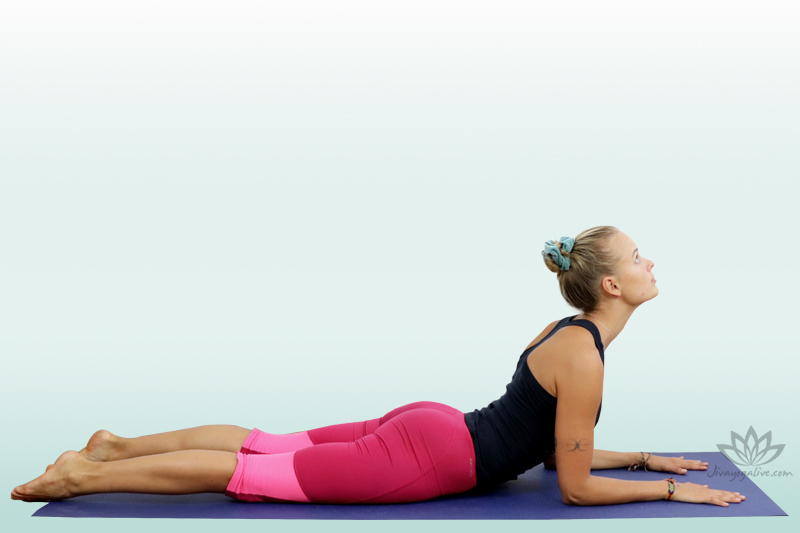
Sphinx Pose - Salamba Bhujangasana

Seated Forward Bend – Paschimottanasana

Come down to sitting and send the legs out long in front. Remove the flesh from underneath the sitting bones to lengthen the spine and reach the hands up towards the sky, lengthening the side bodies. Start to extend the arms forward, stretching from the tailbone up the spine, eventually releasing the hands to the ground, to the legs or to the feet. The posture lengthens the entire underside of the body from the heels, up the back of the legs and the spine, through to the crown of the head, while also compressing the abdominal organs and stimulating the digestive system.

Seated Forward Bend - Paschimottanasana

Bridge Pose – Setu Bandhasana

Slowly lower down to lying on the back bringing the hands down by the sides of the body. Bend the knees and walk the feet back towards the glutes here, making sure legs will be parallel with one another. Pull the spine down and ensure that the sacrum is connecting down to the mat.

Press into the heels and lift the hips to come into Bridge Pose. Walk the shoulders underneath one another and if there is room, interlace the hands underneath the lower spine, pressing the forearms into the mat.

Bridge Pose is going to open the chest and send the chest towards the chin in order to compress. Continue to press into the heels to work the hips higher and take deep breaths to open and stretch the lungs. This is going to help remove any obstruction that is causing a cough.
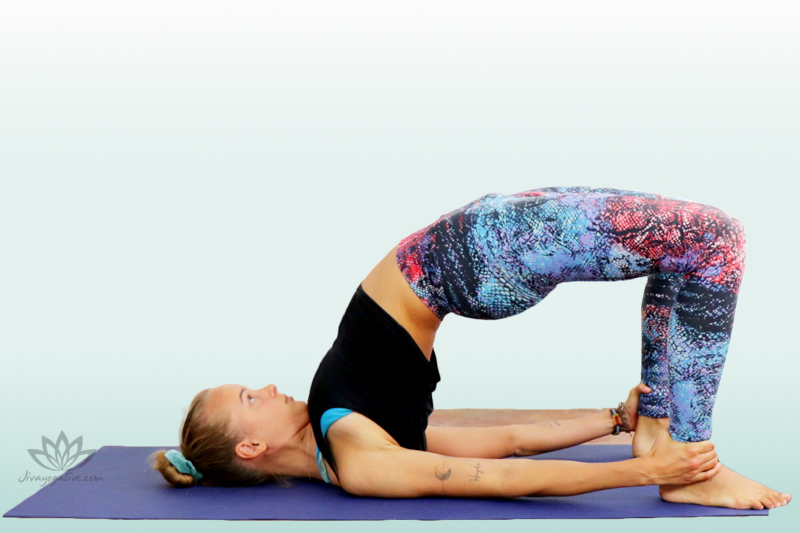
bridge pose - setu bandhasana

Headstand Pose – Shirshasana     

Come onto all fours and bring the elbows down to the mat, keeping them shoulder width apart. Grab for opposite elbows to find the correct alignment for the base and then keeping the elbows where they are, release the elbows and interlace the hands in front, creating a triangle shape with the arms.

The crown of the head is going to come down to mat and rest in the cupped, interlaced hands. Start to lift the hips up and walk the feet in towards the body.

Come up on to the toes, sending the hips a little higher. Start to press into the forearms and shoulders and continue to walk the feet in until the hips are as close to the head as is comfortable. Start to bend one knee, bringing it in towards the chest and taking the toes up off the mat.

Repeat with the other leg, making sure to keep the hips over the head. Find the balance and then start to straighten the knees, sending the legs up, coming into a Headstand Pose. Continue to press into the forearms to take some of the weight off of the head.

Pick one point to focus on for balance and then focus on even, steady breaths.

The compression to the crown of the head in this posture is inviting fresh oxygen and blood flow down into the area, boosting circulation and helping to fight against coughs and colds.

Headstand Pose - Shirshasana

Child’s Pose – Balasana     

Come out of Headstand Pose by bending the knees and slowly lowering back down, pulling the knees in towards the chest, dropping one foot down and then the other. Take the knees down to the mat and release the hands down by the sides of the body. Bring the forehead down to the mat for Child’s Pose. Allow the forehead to connect down to the mat and bring awareness to the breath. Surrender completely, letting the full weight of the body rest down and allow the body to come back into balance.

Child's Pose - balasana          yoga for flu and cough

Featured Video: Yoga For Cold & Dry Cough

Does yoga for flu and cough relieve headaches?  

When you have a cold or your head is pounding, yoga might not be the most appealing, but what if I told you, you could stretch the body and ease your suffering without even leaving your bed? Try this video on yoga for flu and cough. Even if it is a migraine you are currently trying to navigate, studies have shown that yoga can reduce the severity of the episode and the need for medication.

Legs-up-the-Wall Pose – Viparita Karani

Lying on your back, bring you hips as close to the wall as you can and then send them up high. If the hamstrings are tight, you can slide a cushion under the hips and bring them slightly away from the wall and rotate them slightly in. Hold this pose for five minutes or as long as is comfortable.

Supported Reclined Bound Angle Pose – Supta Baddha Konasana

Grab a pillow and align it to the vertical length of your spine. Grab two more and have them under the knees to take some of the intensity out of the hips and groins and use this supported variation to surrender the body. Have the head resting back and the chest opening. This is going to create space in the lungs and make room for any cough induced congestion.

Supported Bridge Pose – Setu Bandhasana

This is one pose I have used multiple times in bed, usually when I’ve been travelling and have had nowhere to roll out my mat, but it also great to practice when suffering from sickness and getting out of bed is a hard no.

It helps if your mattress is a little more on the firm side, but the aim is to open the chest and send fresh blood to the head.

This will help to clear the sinuses and at the same time, boost the immune system through activation of the thymus gland. For this supported variation, slide a pillow underneath the sacrum and melt the hips down, focusing more on the opening of the chest. 

Can yoga help with a cold?

There are many variables that can trigger a cold and although they usually aren’t so life threatening they can leave you feeling exhausted and depleted.

Yoga can offer a holistic means of intervention as it works to balance the nervous systems and by drawing fresh blood, specifically the white blood cells, to the head and throat, the sinuses are able to decongest. Standing Forward Bend – Uttanasana

A simple forward bend is going to directly send a oxygenated blood straight into the head and relieve pressure, clear the sinuses, while recharging the nervous system.

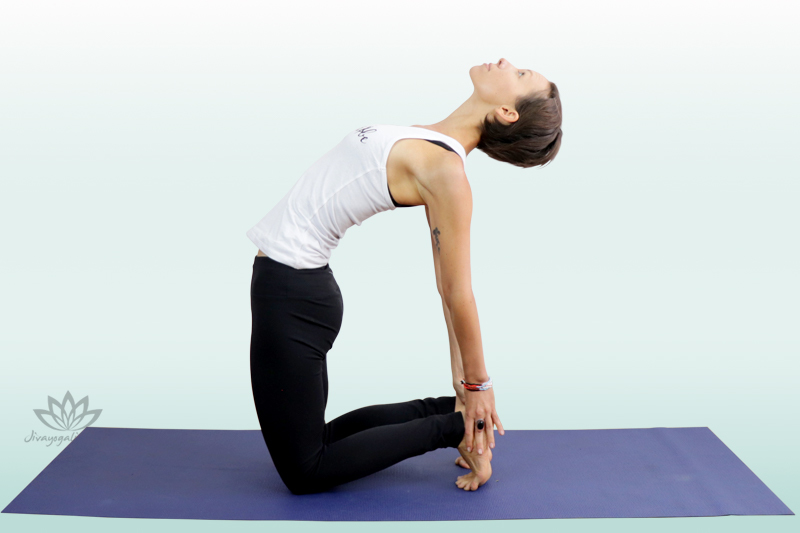
Camel Pose – Ushtrasana

This posture is a dramatic heart opener that stretches the lungs and the chest and creates more room in the respiratory system. Take deep, full breaths in order to get the most benefits in regards to clearing blockages that are contributing to your cold. Fish Pose – Matsyasana Another posture to open the chest, lungs and throat. As the body stretches, mucus that is causing obstruction is dislodged so it can be expelled from the body.

Restorative yoga for illness

Yoga is an alternative means of fighting many types of (dis-ease) in the body. It can help to boost immunity, help with respiratory ailments and manage headaches. When combined with conscious breathing, you have a gentle way of navigating actual healing, as opposed to treating symptoms with band aid pharmaceuticals. 

Sometimes the body just needs to rest and when that is the message the body is relaying, then rest away dear friend.

However, if you do feel as though you have a little energy to scrape off the bottom of the barrel, a little restorative yoga might be all that you need to boost your healing and immune system so you can get back to business as usual. Child’s Pose – BalasanaYou can never go wrong with a gentle Child’s Pose, even if you are at deaths door! Ensure that forehead to ground connection and apply a little more pressure than usual, especially if you are suffering from any kind of congestion in the head.

Continue to apply this pressure for a few rounds of breath and then take the forehead left and right, massaging into the scalp. This is going to help relieve tension and while calming the mind.Reclining Hero Pose – Supta Virasana This pose can be done with the support of props to make it as restorative as possible. Have a cushion or rolled up blanket vertically along the spine, and then bring additional support for underneath the head. This posture will open the chest but without the intensity of the full variation.

Supine Spinal Twist – Supta Matsyendrasana

This posture gently opens across the chest and the shoulders, creating space in the lungs, while also releasing stress and tension that you are harbouring around being unwell.

For the body to heal, dropping stress and anxiety is essential, so we work with poses like simple spinal twists as they have the power ease both the physical and mental bodies.

Honor Your Body’s Messages

Even light yoga may feel like too much if you’re really run down—and that’s okay. If your body is still pleading for full rest, listen. Bookmark this article and return when you’re ready.

But once you feel your energy stir again, yoga for flu and cough can help shake off the heaviness, reduce symptoms, and lift your spirit.

Conclusion

Coughs and colds trigger congestion that we already have backed up in the system. They actually provide an opportunity to expel as much of this obstruction from the body as we can, so taking pharmaceuticals is only going to suppress and bury this lymphatic stagnation further.

Ideally you want to encourage this mucus to come out of the body and yoga is one way we can do exactly that.

This article on yoga for cold and cough therapy has encouraged gentle movement in the body that is going to create space and open up the respiratory system to help tackle the illness. The sequence is simple, making it suitable for all levels of yogi practitioner, and manageable if sickness is hitting hard.

Combining conscious breathing is going to help further de-stress the immune system, making the body more resilient and able to fight back. Move with ease and use this opportunity to show yourself some love. Thank the body for its resilience and it will thank you with a speedy recovery.

About

Charlie Hanna

Charlie is a Yoga Alliance certified Hatha, Yin Yoga & Meditation teacher with a psychology degree in her back pocket. She is currently on a mission chasing sun and Read More..

Pregnant Exercise First Trimester: Gentle Routines to Help You Feel Better Every Day

Embracing the Journey: Pregnant Exercise First Trimester Yoga Flow

Pregnant exercise first trimester routines play a crucial role in laying the foundation for a healthy, joyful pregnancy. As you navigate those early emotional highs and lows—whether you’re awaiting a test result, celebrating a positive one, or processing the overwhelming realization that you’re growing a tiny human—this journey is transformative. If you’re looking for the best way to care for yourself and your baby during this time, embracing a gentle yoga practice in the first trimester is a powerful, nurturing step.

Maybe this is your first pregnancy, maybe it’s not—but no matter your experience, the changes you go through can feel like a complete upheaval. One minute you’re ecstatic, the next you’re anxious. And guess what? All of that is perfectly normal. Welcome to motherhood! This sacred chapter invites you to connect deeply with yourself, to ground your emotions, and to build a strong foundation for the months ahead.

Prioritizing You: The First Step Toward a Healthy Pregnancy

During pregnancy, especially in the first trimester, it’s easy to focus all your energy on doing everything right for your baby. But remember: the best way to care for your little one is to prioritize your own well-being first. As the MECLABS framework teaches, every relationship—especially the one with your growing child—thrives when you give love to yourself first.

Fill up your own cup. Taking care of yourself is not a luxury; it’s a necessity. You deserve to feel good, be supported, and experience peace as your body works hard to nurture new life.

Pregnant Exercise First Trimester – Why It Matters

Your body is undergoing a series of profound changes—physically, hormonally, and emotionally. Incorporating pregnant exercise in the first trimester, particularly prenatal yoga, provides you with the tools to move through this transformation smoothly.

Prenatal yoga isn’t just a fitness trend; it’s a proven method for reducing common pregnancy discomforts, improving circulation, and strengthening the mind-body connection. These practices help you feel grounded, relieve nausea and fatigue, and create space for your baby to grow in a safe and supported way.

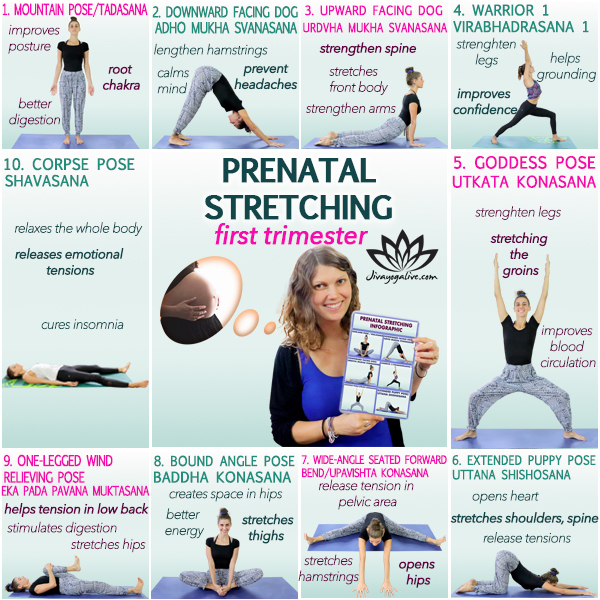
10 Pregnancy Pregnancy Stretches Infographic

prenatal stretches firs trimester infographic_cg-1

Mountain Pose – Tadasana

Start by standing at the top of your mat, feet hip width distance apart and toes pointing ahead. Distribute your weight equally among both feet. Lengthen your back like there is a string attached to the top of your head pulling you up. Broaden your shoulders and keep them away from your ears. Arms are slightly stretched by your sides, palms facing the front.

Mountain pose is a great way to improve your posture and feel grounded. As you stand tall, you create space in your body which in return can help you to breathe more deeply, improve your digestion and your overall circulation.

Mountain Pose - Tadasana

Downward Facing Dog Pose Adho Mukha Svanasana

Place your hands on the floor shoulder width apart and walk your feet to the back of the mat into a plank position. From there start pressing your hips back and up, pushing firmly into your hands and pressing your heels towards the floor. Let your spine get long. Take a couple of deep breaths in this posture.

Downward dog is an excellent stretch for the posterior muscles, helping you get more length in your hamstrings and calves and more space in the hip area. It is also a mild inversion, as your head is below your hips, which can be helpful to prevent headaches and feel calmer and less anxious.

Downward Facing Dog - Adho Mukha Svanasana

Upward Facing Dog Pose – Urdhva Mukha Svanasana

From the plank position, untuck your toes (top of the feet resting on the ground) and let your hips sink towards the ground. Engage your leg muscles so that your knees and thighs are not touching the floor. Look in front of you, pushing your hands onto the ground and your chest forward but keeping the shoulders relaxed.

Upward Facing Dog strengthens your spine, your arms and legs while stretching your front body. As the pregnancy moves forward and the weight of the baby increases, strong spinal muscles can help prevent back pain and keep a good posture.

Upward Facing Dog - Urdhva Mukha Svanasana

Warrior 1 Pose – Virabhadrasana 1

Place your right foot forward, toes pointing ahead. Place your left foot on the back of the mat, at an angle of 45°, aligning the arch of your left foot with the right heel. Let your front knee bend until your knee is above your right ankle. Press firmly into your back foot and let the hips rotate toward the front of the mat. Lift your hands up above you. Take 5 to 10 breaths in this posture and repeat on the other side.

Warrior 1 is grounding and strength building for the legs, arms, shoulders and back. A great posture that can help you feel more confident and powerful. This pose stretches the calves, upper body, and psoas ( creating more space in your groin area).

Warrior 1 Pose - Virabhadrasana 1         pregnant exercise first trimester

Goddess Pose – Utkata Konasana

Open the legs wide and let both feet turn outward. Let the knees bend until they are above your ankles. Make sure the knees and feet are pointing in the same direction. Extend your arms up above your head. Take 5 to 10 deep breaths in this posture, letting the fire build up in your legs and hips.

This is one of the best poses for pregnancy. Time to let your inner goddess shine! This posture will strengthen your legs while stretching your groin and hips improving blood circulation in this area of the body (so more space and nutrients for your baby).

Goddess Pose - Utkata Konasana

Extended Puppy Pose – Uttana Shishosana

From Table Top Position (hips over knees and shoulders over wrists), keep your hips aligned vertically with your knees and start walking the hands forward, letting the chest reach towards the ground. Maybe rest your forehead on the floor or maybe rest your chin. Take 5 to 10 breaths in this position and let gravity do the work for you.

Extended Puppy Pose is a heart opening pose that stretches nicely your spine and shoulders, helping to release all the tensions stuck in this area. It also can help you to breathe more deeply by creating more space for the lungs.

Extended Puppy Pose - Uttana Shishosana

Wide-Angle Seated Forward Bend Pose Upavishta Konasana

Seat with your legs extended wide. Press the floor behind you with your hands to get some length in the spine. If you feel comfortable, start walking your hands in front of you, letting your chest get closer to the ground and lengthening the spine. Take long deep breaths in this posture, focusing your attention on the stretching feeling in the hip area. 

We store so many emotions and tensions in the pelvic area. Stretches like Wide-Angle Seated Forward Bend can help to consciously release those tensions and find more space physically and emotionally

Wide-Angle Seated Forward Bend Pose - Upavishta Konasana             pregnant exercise first trimester

Bound Angle Pose – Baddha Konasana

From a seated position with your legs extended in front of you bring the heels towards your hips and let the knees open towards the ground. Gently press the soles of your feet together and interlace your fingers around your toes. Lengthen your spine while keeping your knees as open as possible and bring your chin slightly towards your chest to feel the stretch up to the back of your neck. Take 5 to 10 breaths here.

This is another one of the top poses to support your pregnancy. It creates space in your hip area and promotes good circulation of blood and energy. The more open and flexible your hips are, the more you will be able to enjoy a pain free pregnancy and easy delivery.

Bound Angle Pose - Baddha Konasana    pregnant exercise first trimester

One-Legged Wind Relieving Pose – Eka Pada Pavana Muktasana

Lie down on the mat with your feet extended. Bring your right knee into your chest and interlace your fingers around your knee. Keep the left leg extended and actively press your right knee towards your armpit using your arms. Take 5 to 10 breaths here and repeat on the other side.

A perfect posture to release any tension in the lower back and stimulate digestion. As the pregnancy moves forward, the digestive system is pushed up and practicing this pose regularly is a good way to keep you going (to the bathroom!).

One-legged Wind Relieving Pose - Eka Pada Pavana Muktasana

Corpse Pose – Shavasana

Lie down on the mat with your legs slightly open and feet turned outward. Rest your hands by your side, palms facing up or place them on your belly. If it feels more comfortable, you can also roll a blanket and place it underneath your knees. Try to make yourself as comfortable as possible. Stay as long as you want in this posture, taking your time to get out of it before returning to your daily activities.

Shavasana is also one of the top poses for pregnancy. Learning to relax is often overlooked but so important to keep your energy level up and your emotional state balanced.

As you lie down, you let go of everything that no longer serves you, all the physical, mental and emotional tensions. And as you emerge, you are refreshed and recharged. Self care has never felt so good!

Corpse Pose - Shavasana

Featured Video: Very Good Pregnancy Stretches First Trimester

Conclusion

During your everyday life throughout your yoga practice (whether you’re a beginner or not), try to pay extra attention to how you’re feeling.

Check in with yourself regularly. Are you feeling tired? Take a break, nap, do some relaxation. Feeling hungry? Eat a healthy, nutrient packed meal. Feeling too tight during a stretch? Don’t push it. Pregnant exercise first trimester is about listening to your body and honouring it. Feeling overwhelmed by a wave of pregnancy hormonal craziness? Let it all out!!!

About

Clementine

Clementine is a multi-style prenatal yoga teacher, world traveler and animal lover. She started yoga back in 2015 and fell in love with this beautiful ancient practice. Read More..

pregnant-exercise-first-trimester

Rhinitis During Pregnancy: Relieve Nasal Congestion Naturally with Yoga

Are You Dealing with Rhinitis During Pregnancy? Here’s What You Need to Know

If you’re struggling with a runny or stuffy nose while expecting and there’s no sign of a cold or allergies, you might be facing rhinitis during pregnancy. This common yet often overlooked condition can begin in the first trimester but is most prevalent during the second and third. Affecting about 20% of pregnant women, rhinitis during pregnancy can linger for six weeks or longer and typically vanishes soon after delivery. For some women, it’s inevitable; for others, they may not experience it at all—it truly is a pregnancy lottery.

What Causes Rhinitis During Pregnancy?

Rhinitis during pregnancy is likely triggered by hormonal changes. Elevated levels of hormones such as estrogen can cause the blood vessels in your nasal passages to expand. This leads to swelling in the mucous membranes and stimulates your glands to produce more mucus, which results in nasal congestion and a constant runny nose.

This isn’t an infection and isn’t harmful to you or your baby, but it can make breathing through your nose more difficult and disturb your sleep. Fortunately, while you may not be able to stop it completely, you can take steps to ease the symptoms.

Simple Remedies to Alleviate Rhinitis During Pregnancy

  • Nasal Strips for Easier Breathing: Many women find relief by using over-the-counter nasal strips. These strips gently open the nostrils, making it easier to breathe through the nose without medication.
  • Elevate Your Upper Body: Sleeping with an extra pillow or elevating the upper part of your body can help reduce nasal swelling and promote better airflow while you rest.
  • Try a Neti Pot for Nasal Irrigation: A neti pot can be a safe and effective way to flush out excess mucus and allergens. Use it daily, especially before bedtime, to clear your nasal passages. 

When to Seek Medical Advice

While rhinitis during pregnancy is generally harmless, consult your healthcare provider if you experience:

  • Nosebleeds
  • Facial pain
  • Thick, discolored nasal discharge
  • Symptoms lasting more than 6 weeks without improvement

These may indicate a more serious condition that needs medical attention.

childs pose vector

TRAINING TYPE: INSTRUCTIONAL 

CATEGORY:YOGA

SUBCATEGORY:PREGNANCY  

PLANNED TIME:5 MINUTES

LEVEL:ALL LEVELS  

PROPS:NONE

What are the benefits of Nadi Shodhana or alternate nostril breathing for rhinitus during pregnancy?

Nadi Shodhana or Alternate Nostril breathing. It is a powerful technique that helps reduce stress and anxiety, soothe the nervous system, balance hormones and support clear and balanced respiratory channels.

When your nose is blocked for a long time and you can only breathe through one nostril it creates an imbalance in the subtle channels of the mind and body, which can lead to you feeling more tired and/or unsettled.

By breathing alternatively through your left and right nostril, you recreate the natural balance of the body. I recommend that you clean your nose with a neti pot before doing this exercise if your nose is really blocked.

Alternate Nostril Breathing - Nadi Shodhana

Nadi Shodhana – Alternate Nostril Breathing


Start by sitting in a comfortable seated position that allows your back to be upright. You may sit on a chair or put a pillow underneath your hips if your sitting on the floor. Whatever works best for you. 

Place your right hand if front of your nose and with your thumb block your right nostril. 

Inhale through the left nostril and then block the left nostril with your 4th finger, freeing up your right one. Exhale through the right nostril and then inhale through the right nostril. 

Block your right nostril with your thumb and free your left one. Exhale through your left nostril. This is one round. 

Try to practice this technique for 5 minutes or 25 rounds

Featured Video: Yoga Exercise For Blocked Nose In Pregnancy

Conclusion

I hope this breathing technique will help you feel better if you’re suffering from gestational rhinitis. The good news is that this condition automatically disappears once your baby is born. In the meantime breathe (pun intended), this too shall pass!

About

Clementine

Clementine is a multi-style prenatal yoga teacher, world traveler and animal lover. She started yoga back in 2015 and fell in love with this beautiful ancient practice. Read More..

rhinitis_during_pregnancy

Is Yoga Evil or Demonica

Is yoga evil or demonica? This question, though provocative, is one that has been circulating for decades. For many people, yoga is simply a way to move the body, reduce stress, and foster well-being. For others, it serves as a pathway to open the body and mind for deeper meditation. Historically, the original yogic practitioners intended to still the body entirely to reach higher states of consciousness. These purposes are far from being influenced by evil or demonic forces. In fact, pushing the body too far too soon—like forcing into the splits—might be better described as ego-driven, rather than demonically inspired.

Understanding the Symbolism Misinterpreted as Demonica

The idea that yoga is demonic may stem from its connection to ancient texts and symbolic imagery, such as depictions of the goddess Kali holding a severed head. These images, though striking, are symbolic representations, often misunderstood outside of their cultural and spiritual contexts. For example, Kali’s image represents the destruction of ego and ignorance, not malevolence.

Even commonly practiced gestures like Anjali Mudra (hands in prayer position) and chanting mantras can be misread by those unfamiliar with spiritual traditions. To someone opposing religion or mysticism, these practices might appear threatening. However, they are meant to center the mind and heart, not to invoke fear or darkness.

What Yoga Truly Is: A Path of Connection

Yoga means “union” or “connection.” This union can be seen as the integration of body and mind, breath and movement, or the self with higher consciousness. By creating this union, yoga helps sever the grip of the ego, even if only briefly, allowing for calm and relaxation.

Yoga also enhances alignment, boosts flexibility, and stimulates internal organs. When practiced with attention to breath, yoga becomes a moving meditation that quiets the mind and invites stillness and peace.

Clarifying What Yoga Is Not

It is a misconception to think of yoga as a religion. While yoga may complement someone’s spiritual or religious life, it does not require religious belief to be practiced. Many approach yoga purely for its physical benefits or as a tool for psychological healing.

Historically, yoga was developed to prepare the body for deeper inner work—understanding the ego, letting go of what no longer serves us, and becoming fully present. These practices are grounded in self-awareness and healing, not in anything demonic or evil.

Yoga Is Universal: For All People

Yoga and meditation are practices that transcend religious or cultural boundaries. Whether you are religious, spiritual, agnostic, or atheist, yoga offers tools for balance and well-being. People of all ages and backgrounds practice yoga worldwide, benefiting physically, mentally, and emotionally.

Although ancient yogic texts hold great wisdom, studying them is not a prerequisite. Yoga is a complete system designed to promote well-being on all levels, and countless individuals use it to enhance their quality of life.

Conclusion: Yoga Awakens, Not Corrupts

At its core, yoga is about love, presence, and unity. It encourages awakening from the illusion of the ego—ironically, the very thing more deserving of the labels “evil” or “demonic.” Yoga can be as simple as a physical exercise or as profound as a transformative psychological journey.

By detaching from unhelpful thoughts and focusing on breath, body, and the present moment, yoga helps reduce stress, anxiety, and depression. Far from being evil or demonic, yoga is a deeply empowering practice for inner peace and clarity.

Want to understand how yoga can transform your life from the inside out? Click here to access our full course and explore the deeper truths of this ancient, universal practice.

Featured Video: Yoga Evil or Demonic

About

Charlie Hanna

Charlie is a Yoga Alliance certified Hatha, Yin Yoga & Meditation teacher with a psychology degree in her back pocket. She is currently on a mission, chasing sun and Read More..

Ready to learn more about yoga? Click here to access courses for and start your journey toward lasting wellness today.

5 Fresh Juices Good For Pregnancy

Are you experiencing a runny nose or stuffy nose while being pregnant but without any other symptoms of a cold or an allergy?

You might be suffering from the infamous pregnancy rhinitis. The first trimester has the morning sickness, the second and third pregnancy rhinitis. This affects about 20% of pregnant women and can last for 6 weeks or more. It usually disappears right after birth. Some women will experience it, others don’t, it’s like the lottery!

It is likely caused by some of the pregnancy hormones, which cause the blood vessels and mucus membranes in your nose to expand and increase the activity of your glands, producing more mucus and nasal congestion. There is not much that you can do about it but you can use some tricks to be able to breathe more easily through your nose and feel more comfortable. 

Some women experience some relief by placing a strip on the nose that helps the nostrils to open, others place a pillow under their back while sleeping to keep the upper body elevated. You can also use a neti pot to clean your nose during the day and before bedtime. You will find a good article about how to use a neti here.

childs pose vector

TRAINING TYPE: INSTRUCTIONAL 

CATEGORY:YOGA

SUBCATEGORY:PREGNANCY  

 PLANNED TIME:5 MINUTES 

LEVEL:ALL LEVELS  

PROPS:NONE

What are the benefits of Nadi Shodhana or alternate nostril breathing?

Nadi Shodhana or Alternate Nostril breathing. It is a powerful technique that helps reduce stress and anxiety, soothe the nervous system, balance hormones and support clear and balanced respiratory channels.

When your nose is blocked for a long time and you can only breathe through one nostril it creates an imbalance in the subtle channels of the mind and body, which can lead to you feeling more tired and/or unsettled.

By breathing alternatively through your left and right nostril, you recreate the natural balance of the body. I recommend that you clean your nose with a neti pot before doing this exercise if your nose is really blocked.

Alternate Nostril Breathing - Nadi Shodhana

Nadi Shodhana – Alternate Nostril Breathing

Start by sitting in a comfortable seated position that allows your back to be upright. You may sit on a chair or put a pillow underneath your hips if your sitting on the floor. Whatever works best for you. 

Place your right hand if front of your nose and with your thumb block your right nostril. 

Inhale through the left nostril and then block the left nostril with your 4th finger, freeing up your right one. Exhale through the right nostril and then inhale through the right nostril. 

Block your right nostril with your thumb and free your left one. Exhale through your left nostril. This is one round. 

Try to practice this technique for 5 minutes or 25 rounds

Featured Video: Yoga Exercise For Blocked Nose In Pregnancy

Conclusion

I hope this breathing technique will help you feel better if you’re suffering from gestational rhinitis. The good news is that this condition automatically disappears once your baby is born. In the meantime breathe (pun intended), this too shall pass!

About

Clementine

Clementine is a multi-style prenatal yoga teacher, world traveler and animal lover. She started yoga back in 2015 and fell in love with this beautiful ancient practice. Read More..

9 Yoga Poses for Cough and Phlegm

When you’re looking for yoga poses for cough and phlegm, it’s important to understand that yoga is not only for flexibility and peace of mind—it can also help relieve respiratory discomfort. I remember when I was a beginner starting my yoga journey on my own, long before yoga dominated the online world. I had heard … Continue reading “9 Yoga Poses for Cough and Phlegm”

When you’re looking for yoga poses for cough and phlegm, it’s important to understand that yoga is not only for flexibility and peace of mind—it can also help relieve respiratory discomfort. I remember when I was a beginner starting my yoga journey on my own, long before yoga dominated the online world. I had heard of its many benefits but didn’t know how to begin. Trying (and failing) to get into the splits quickly became my daily frustration, and I would give up, thinking my body wasn’t built for this.

Finding Structure and Breath: My Turning Point

Eventually, I discovered a local yoga studio. While I still couldn’t master the splits, I found the guidance I needed to understand yoga’s deeper value—including how certain yoga poses for cough and phlegm relief could support my overall health. The structure of a class helped me stay consistent, something I struggled with on my own. Even on my most distracted days, the class held space for me to reconnect with my body and breath.

Realizing the Power of Home Practice

As I began experiencing the benefits—like better flexibility and a clearer, calmer mind—I started wanting that feeling more regularly. That led me to commit to practicing at home. Here’s the thing: yoga doesn’t require a 90-minute session every day. I learned that even fifteen minutes of focused breath and movement could significantly ease my chest and throat congestion. Certain postures open the lungs, stimulate lymphatic flow, and reduce inflammation, making them ideal yoga poses for cough and phlegm.

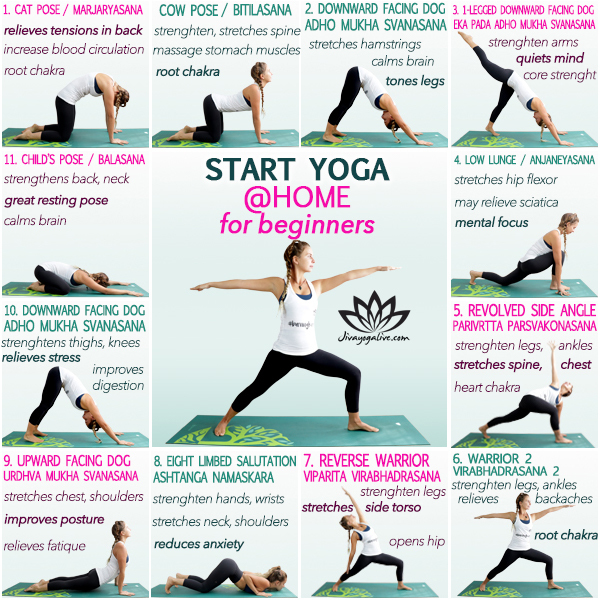
Start Yoga at Home For Beginners ​Infographic – Yoga Poses for Cough and Phlegm

how to start yoga at home for beginners infographic

Cat-Cow – Marjaryasana-Bitilasana 

Coming into a Table Top position, making sure that the wrists are in line with the shoulders and that the knees are in line with the hips. Spine is neutral, head and neck in one line, and the gaze is slightly down and towards the top edge of the mat. Inhale, drop the belly down, take the heart forward, arching the back, coming into Cow.

Exhale and move into Cat Pose by pushing into the palms, rounding the upper back, bringing the belly button back towards the spine and dropping the chin to the chest. Inhale, again coming forward, opening the chest. Exhale, pushing back, rounding the spine. It’s good to work through a few rounds of these Cat-Cow movements in order to warm up the spine and let it know we’re going to move into it.

This pose mobilises the spine, shoulders and the neck and is the perfect warm up for all levels of yogi. It is a gentle way of preparing the body and the spine for deeper stretches and is a safe way of relieving tension from the back.

cat-cow

Downward Facing Dog – Adho Mukha Svanasana

Tuck the toes and push into the palms and take the hips up into Downward Facing Dog. Start by pedalling out the legs and bending the knees. Pushing down into the palms, fingers are spread wide and allow the head and neck to drop.

Downward Facing Dog is an opportunity to catch you breath and balance before moving onto the other side of the body during your flow.

downward facing dog pose

One Legged Downward Facing Dog – Eka Pada Adho Mukha Svanasana

Rise the right leg back and up, coming into a One Legged Downward Facing Dog.

It is very common to dump the weight of the body into the left shoulder here, but try to keep the shoulders square by pressing evenly into both hands.

one legged downward facing dog

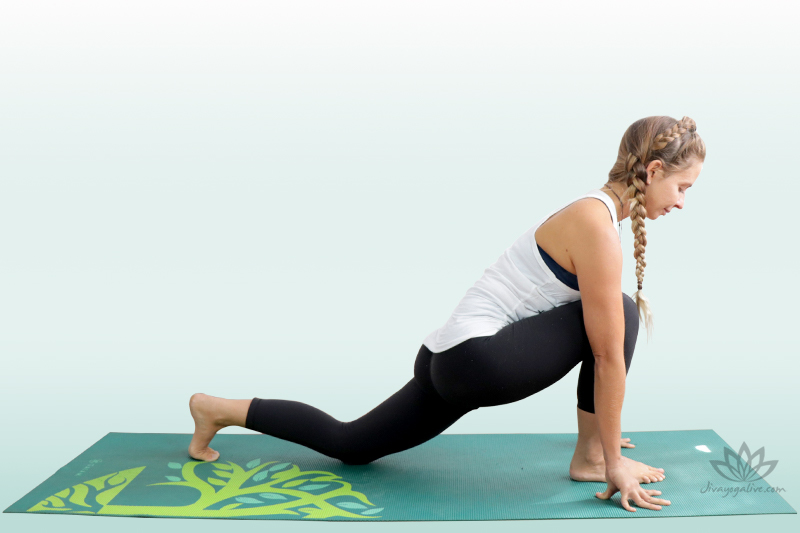
Low Lunge – Anjaneyasana

Bend the right knee and come forward, transferring the weight into the hands and step in between the palms, coming into Low Lunge. Hands will frame either side of the front foot and you can use the fingertips for support. There is the option to rise the back knee or you can take it down for more support. Make sure that the neck and head are in line with the spine.

In Low Lunge you can start to work into the flexibility of the back hip flexor by squeezing the gluteus muscles. Try to keep the hips square, by sending the back hip forward.

low lunge 2

Revolved Side Angle – Parivrtta Parsvakonasana 

Take the left palm and press it flat down into the earth and take the right arm. Spinning the chest open coming into an Revolved Side Angle. Gaze is up to the top hand. Really pressing down into the left palm and the ball of the back left foot. Take a breath, and open the chest more.

This pose strengthens and stretches legs, groin, hamstrings and at the same time opens the chest, the shoulders and the spine.

revolved side angle pose - twist

Warrior 2 – Virabhadrasana II  

Spin the back foot down and cartwheel the arms, coming into a Warrior Two. The front toes are facing forward, and the back foot is in on an angle. Press down firmly into the outer blade of the back foot. Arms are extending long to the sides and as you exhale, drop a little deeper, staying low in the legs.

Warrior 2 is working deep into the strength of the legs and is particularly powerful if you energetically hug the legs together. This turns on the underside of the thighs and requires strength, determination and concentration. All of this is going on, while you are cultivating balance and groundedness.

warrior 2

Reverse Warrior – Viparita Virabhadrasana   

Inhale and lean the torso forward and flip the front palm. Lean back, stretching the front hand up and back, coming into a Reverse Warrior. Stay low in the legs and find strength by hugging the feet to the midline, activating the underside of the thighs.

The key in Reverse Warrior is to stay low in the legs. It might seem like a reprieve and a moment to take rest after a strong Warrior 2, but keep in mind that the mind will often bow out before the body is ready, so see if you can stay low for a couple more breaths!

reverse warrior pose

Eight Limbed Salutation – Ashtanga Namaskara    

Cartwheel the arms down to the ground and push back into a Downward Facing Dog momentarily. Take a deep breath here and then move into Eight Limbed Salutation, also known as Knees-Chest-Chin Pose. Drop the knees directly down, take the chest down in between the palms and have the weight is in the hands. Hips and tailbone are staying up to the sky. Hugging the elbows in towards the body, with the chin slightly resting on the earth.

Knees-Chest-Chin Pose pose can seem tricky at first, but the key is to have the weight in the hands and to be drawing the elbows in towards the body. Everything else is relatively light and the chin is only gently resting on the mat.

Eight limbed salutation - ashtanga namaskara          yoga poses for cough and phlegm

Upward Facing Dog – Urdhva Mukha Svanasana    

Come down onto the belly and then slide forward into Upward Facing Dog. Make sure the shoulders are down away from the ears and draw the shoulder blades back and together. Exhale, and bend the elbows and lower the torso and forehead back down to the earth.

Here you are stretching and strengthening the spine and shoulders, toning the abdomen and opening the chest and lungs. The key is to really lift the chest and squeeze the shoulder blades back and together. There should be ample room between the shoulders and ears.

upward facing dog           yoga poses for cough and phlegm

Downward Facing Dog – Adho Mukha Svanasana  

Push back into a Downward Facing Dog and then preparing to move into the other side of the body. Notice the difference between your first Downward Facing Dog of your practice and your last. When the body is stiff this pose can feel like a full workout, but as the body warms and opens, it gets easier and easier to hang out here.

downward facing dog pose

Extended Child’s Pose – Balasana

After finishing up the other side of the body, drop the knees down as wide as the mat and settle back into a Extended Child’s Pose. Dropping the forehead down to the earth, allow the belly to be soft in between the thighs and take rest.

This is the perfect pose to take rest in, both during and after your practice. It’s an opportunity to bring everything back into balance, to find your breath and to elongate the spine.  

Downward Facing Dog – Adho Mukha Svanasana   

extended child pose       yoga poses for cough and phlegm

Featured Video How to Start Yoga at Home for Beginners

Yoga Poses for Beginners

If you are still feeling a little lost on your mat, its ok, because I’ve got your back 🙂

I want to share with you some very beginner friendly poses that lay the foundations for most of the yoga flows you will be introduced to in a class. It also means if you don’t have access to the internet and an online tutorial. You can simply move through these simple poses two or three times, spend some time is Savasana (laying flat on your back) at the end and bam, you’ve got yourself a solid yoga practice. If you can get comfortable with these poses, and even better their Sanskrit names, you’ll be ahead of the game when you finally do make it into a class.

Cat-Cow – Marjaryasana-Bitilasana Moving through a few rounds of Cat-Cow is extremely juicy and therapeutic for the whole back and neck. The opposing movements allow you to both stretch and compress the spine, inviting more space and increasing mobilisation. Really be dramatic with the postures by pulling the shoulder blades apart when you’re imitating an angry cat and sucking the belly button right back to the spine in Cow. Spend a few extra minutes working into some intuitive free movement, moving the spine back and forth, the hips from side to side and taking some body rolls – anything that feels good in YOUR body in order to warm up the spine.  

Downward Facing Dog – Adho Mukha Svanasana

Downward Dog is one of those poses that in the beginning it simply sucks! Your heels refuse to reach the floor, the shoulders and arms are quick to tire and it feels like your instructor is making you hang out there for hours. You’d rather drop the knees and take a Child’s Pose. However, over time, and once you have the proper alignment down, Downward Dog starts to become your home base. It becomes a pose you can relax into and it provides a reset and full body stretch between flows and the more difficult poses. The key is getting the foundations of the pose down right from the get go. I encourage you to get an instructor to guide you into the pose in class or find a tutorial online!  

Low Lunge – Anjaneyasana

Get the alignment of the legs and feet right in a simple Low Lunge and you already have the the foundational base ready to jump into other standing poses, such as the Warriors! Here you have the option to work into both your strength and flexibility; and there is always the option to take a modification and drop the back knee down to the earth. This makes this pose very accessible and beginner friendly, yet you will still be working to stretch, strengthen and simultaneously improve balance and focus.

Revolved Side Angle – Parivrtta Parsvakonasana

The trick to finding some ease in the perceived effort of this pose, is to hug the feet towards the midline. This goes for all the standing poses in order to find strength and activate the underside of the legs. This will tap into your power reserves and you’ll be surprised at the strength you have. Remember, the mind will always want to quit before the body does, so when you feel like coming out of a pose, firm into the legs and see if you can find just two more breaths!

Warrior 2 – VirabhadrasanaI invite you to stand in your strength in this pose, as an incarnation of a fierce warrior, Shiva. When that front leg starts to tire, keep in mind that zen archers would practice holding a bow for two years in this position before they were allowed to shoot their first arrow. Find some ease in the effort by energetically drawing the feet towards the midline, as though you want to bunch up your mat at the middle. The aim is to stand firm and strong, yet at the same time relaxed and at ease.

Cobra – Bhujangasana

An energizing back bend to open the chest and heart. Bhujang means ‘serpent’, and this pose is an essential component of the Surya Namaska – the Sun Salutations. It is a powerful chest opener and at the same time, it is extremely therapeutic for the spine. It also works to stretch and tone the abdominal muscles and organs and stimulate the digestive fires.

These yoga poses for cough and phlegm can be used in your regular practice for all benefits not just limited to cold and flu recovery.

Is Doing Yoga at Home Effective?

The more consistent you are with your yoga practice at home, the more effective it is going to become. The same with anything, consistency is the key, but this doesn’t mean that you have to practice for an hour, seven days a week! Spending twenty minutes each day on your mat, to stretch the mind and the body is going to have profound effects on your life across the board. If there are days you don’t feel up to yoga, give some meditation or Pranayama a go.

Meditation

If you are new to meditation, then the chances are that sitting in silence trying to quiet the mind is going to lead to a whole lot of frustration and very little stillness. Meditating in this way is actually very advanced, as you’ll find out quickly that it can be very challenging to quiet down the stories of the mind. A better option in the beginning is to find some guided meditations that resonate.

Pranayama

Breathing is something we do so naturally, that it requires no conscious effort. It is an involuntary action that is happening whether we are awake or sleeping. To breathe, is to live. Pranayama is the practice of controlling the breath, with Prana meaning ‘life force’ and yama meaning extending or stretching in Sanskrit. Controlled breathing can decreases the effects of stress, instil focus and mental clarity and can energize and detox the body.

One simple Pranayama technique, is known as the Cooling Breath Pranayama / Sitali Pranayama. Find a comfortable easy seat. Curl the tongue into a U shape and project it out of the mouth slightly. If you can’t curl the tongue it is fine to make an O shape with the mouth. Take the chin to the chest and then begin to inhale through the mouth, taking the chin up and dropping the neck back as far as is comfortable. Close the mouth and exhale through the nose as you drop the chin back down to the chest.

Repeat for eight to twelve breaths. Any time spent on your mat, is time well spent and over time there is an accumulative effect that takes place and the benefits start to ripple out and have a domino effect across so many aspects of your life.

How to Start Yoga When Overweight

Going into a yoga studio can seem a little daunting if you don’t think you fit the typical yogi image, but yoga can (and should!!), be practiced by everyone. At all ages and stages of life, and by all shapes and sizes. We all start somewhere and there are so many styles of yoga and variations of the poses, that make them accessible to all. If there is some doubt and anxiety in the mind though, there is the perfect opportunity here to start practicing at home.

Jessamyn Stanley is a great role model to check out! She is using yoga to promote positive body image and breaking down mental and emotional barriers to practicing. She emphasizes how you FEEL, as opposed to how you look and she celebrates her students bodies in all the shapes and sizes that they come in. She has a top selling book on Amazon called, Every Body Yoga: Let Go of Fear, Get on the Mat, Love Your Body, and I HIGHLY recommend checking that out!

Yoga is a mindset that cultivates self love and body confidence. Love your body where it is at and show it some kindness by taking this time for self care. With consistency your body will open and start to change, so enjoy the journey and allow the transformation to unfold.

Consistency Beats Intensity

You don’t have to go all in with a full yoga class every day. The beauty of yoga is that it adapts to your needs. Whether you’re using yoga poses for cough and phlegm, improving flexibility, or simply clearing your mind, the key is to be consistent. Once your body and mind begin to feel the shift, you’ll always return to your mat. Even if life gets in the way, the practice stays within you.

Conclusion: Yoga Poses for Cough and Phlegm to Breathe Better & Feel Better.

Yoga isn’t just about contorting into complex poses. It’s a tool for self-care, and certain poses can directly aid your respiratory system. When practiced mindfully, yoga poses for cough and phlegm can relieve discomfort, calm the mind, and restore energy. You don’t need to be an expert—just start with a few minutes each day.

Ready to breathe deeper and feel more clear-headed? Click here to explore our complete guide to yoga courses and start your journey toward better breathing today.

About

Charlie Hanna

Charlie is a Yoga Alliance certified Hatha, Yin Yoga & Meditation teacher with a psychology degree in her back pocket. She is currently on a mission chasing sun and Read More..

Nadi Shodhana Pregnancy Blocked Nose Remedy to Naturally Relieve Congestion

If you’re searching for a nadi shodhana pregnancy blocked nose remedy, you’re likely dealing with a frustrating case of pregnancy rhinitis. Many expectant mothers experience a runny or stuffy nose during pregnancy, even when they have no signs of a cold or allergy. This common condition affects around 20% of pregnant women, especially in the second and third trimesters, and can persist for weeks—usually resolving after childbirth.

What Causes Pregnancy Rhinitis?

Pregnancy rhinitis is believed to be linked to hormonal changes that increase blood flow and mucus production in the nasal passages. These changes cause your nasal tissues to swell and glands to become more active, making it harder to breathe through your nose. While you can’t fully prevent it, there are natural remedies to ease the discomfort and restore clearer breathing.

Breathing Freely: Why Nadi Shodhana Helps

Nadi Shodhana, also known as alternate nostril breathing, is a yogic technique highly effective in promoting balanced energy and clearer nasal passages. As a natural nadi shodhana pregnancy blocked nose remedy, it helps reduce congestion by calming the nervous system and enhancing airflow through the nostrils.

childs pose vector

TRAINING TYPE: INSTRUCTIONAL 

CATEGORY:YOGA

SUBCATEGORY:PREGNANCY  

PLANNED TIME:5 MINUTES

LEVEL:ALL LEVELS  

PROPS:NONE

Nadi Shodhana pregnancy blocked nose remedy – What are the benefits?

Nadi Shodhana or Alternate Nostril breathing. It is a powerful technique that helps reduce stress and anxiety, soothe the nervous system, balance hormones and support clear and balanced respiratory channels.

When your nose is blocked for a long time and you can only breathe through one nostril it creates an imbalance in the subtle channels of the mind and body, which can lead to you feeling more tired and/or unsettled.

By breathing alternatively through your left and right nostril, you recreate the natural balance of the body. I recommend that you clean your nose with a neti pot before doing this exercise if your nose is really blocked.

Alternate Nostril Breathing - Nadi Shodhana

Nadi Shodhana – Alternate Nostril Breathing

Start by sitting in a comfortable seated position that allows your back to be upright. You may sit on a chair or put a pillow underneath your hips if your sitting on the floor. Whatever works best for you. 

Place your right hand if front of your nose and with your thumb block your right nostril. 

Inhale through the left nostril and then block the left nostril with your 4th finger, freeing up your right one. Exhale through the right nostril and then inhale through the right nostril. 

Block your right nostril with your thumb and free your left one. Exhale through your left nostril. This is one round. 

Try to practice this technique for 5 minutes or 25 rounds

Featured Video: Yoga Exercise For Blocked Nose In Pregnancy

Conclusion

I hope this breathing technique will help you feel better if you’re suffering from gestational rhinitis. The good news is that this condition automatically disappears once your baby is born. In the meantime breathe (pun intended), this too shall pass!

About

Clementine

Clementine is a multi-style prenatal yoga teacher, world traveler and animal lover. She started yoga back in 2015 and fell in love with this beautiful ancient practice. Read More..

nadi_shodhana_pregnancy_blocked_nose_remedy

Ultimate Guide To Hip Bursitis Yoga

This flow will gently stretch and strengthen the hips with special consideration to people practicing with bursitis pain. The seven postures of the sequence will help relax the muscles and increase range of motion and flexibility without causing stress and irritation on the hip joints. Practice with or without props for support. Enjoy the flow!

Often, what we feel in one area of our body will result in sensations elsewhere in the body. Obviously, this makes sense, since the body is a machine of many parts working together as one, but as we all know, figuring out which sensation is the source of another is not often so obvious. Frequent headaches, for example, can seem like an isolated problem of its own, but, in fact, almost never is. No smoke without fire, right? One of the most common causes of frequent headaches is simply poor posture. When the head is constantly pulled forward, it strains the neck and the jaw causing headache-inducing tension. As you can imagine, or perhaps already know, yoga can be truly magical for improving posture. Consequently, it stands to improve headaches and migraines as well. Researchers in this study concluded that in addition to conventional treatment, yoga therapy notably helped patients to reduce the frequency and intensity of migraines.Personally, I come from a military family, grew up taking dance classes and began my yoga practice early in college, so good posture has been reinforced throughout my entire life. I’m very lucky that it’s something my body has learned to do well, but for sure there are times when it forgets. This happens when something out of the ordinary is changing my regular habits, like spending lots of time reading on vacation, or too much time looking down at my phone/book/journal on a day of traveling from flight to flight. In these instances it’s extremely obvious for me that the pain and tension I begin to feel is coming from extended time in these hunched posturesThe American Council on Exercise praises yoga’s effectiveness for improving posture, explaining that the practice “massages the skeletal system, which supports bone mass and growth, while reducing tension in the supporting muscles and tendons.”If you find yourself suffering from frequent headaches, especially if you often have pain or tension in your neck and shoulders, see how your posture is looking these days. It could be time to bring a new intention to your yoga practice and get your posture into a proud and healthy position.

 20 Minute Restorative Yoga Flow For Neck Pain and Headaches

 This restorative flow for neck pain and headaches will cover a sequence of seven poses that will leave you feeling open and relieved in your neck and shoulders. These poses focus on opening through the upper back and neck in order to release tension and pain. These stretches can accommodate any level of practice from beginner to advanced yogi. This flow is perfect for relieving pain from poor posture, time spent over a desk or device, and residual soreness from other physical activities. For those suffering from chronic pain in the neck and shoulders, practicing this sequence daily will maximize the benefits of the postures. No props are needed for this sequence and it’s perfect for practicing anytime, anywhere!

Yoga For Neck and Shoulder Pain Infographic

yoga poses for neck and shoulder pain infographic

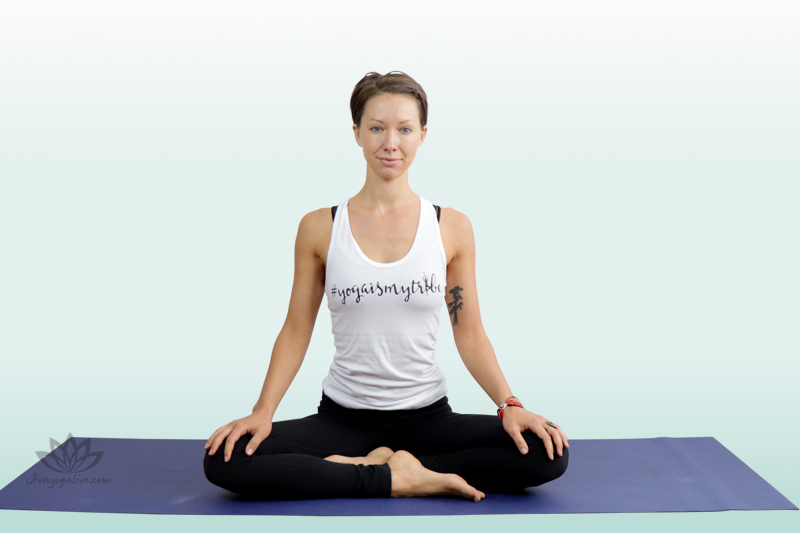
Easy Pose – Sukhasana

Starting from an easy sitting posture, we’ll begin this practice by warming up the neck and shoulders with some gentle rolling movements. With the hands resting gently on the knees, raise the shoulders towards the ears and roll the shoulder blades down the back. Continue this movement while breathing into the space at the base of the neck and between the shoulders. After a few breaths, reverse the direction and continue the same movement in the forward direction.

From Easy Pose, make sure the spine is tall with heart over hips and head over heart. Breathe deeply from the base of the spine all the way to the crown of the head. Exhale and follow the nose down toward the chest. Inhale and follow the nose toward the sky. Exhale the nose back down toward the chest and continue the flow matching your breath with each movement allowing space to open in the back of the neck.Return the gaze to neutral, inhale. Exhale turn the gaze over the right shoulder. Inhale back to center, exhale look over the left shoulder. Continue inhaling back to center and exhaling over the shoulder for a few breaths.

Coming back to neutral in the center, inhale and exhale drop the right ear to the right shoulder. Inhale to center and exhale the left ear to the left shoulder. Continue this for a few breaths, making sure to focus the breath on expanding the space in the neck and tops of the shoulders.

easy pose sukhasana

Thread The Needle Pose –  Parsva Balasana 

Come into a table top position, perhaps taking a moment to move through a few cat/cows and when you’re ready, open the right hand up towards the sky allowing the gaze to follow and opening across the chest and through the back of the right shoulder. Exhale, return the right hand to the mat, palm spread wide. Inhale, repeat by opening on the left side. Exhale the left hand back to the mat. Inhale the right arm up, open through the chest.

Exhale, bring the right arm down and “thread” underneath the left arm as the hips sink back to heels. Let the right arm, shoulder and cheek rest against the mat. Breathe deeply here into the shoulder blades and neck, keeping the left arm active and palm wide. Breathe. On an inhale, unwind, exhale return to table top. Inhale the left arm up, exhale “thread” the left hand under the right arm and repeat on this side. After a few breaths, return to Table Top.

Thread the Needle Pose - Parsva Balasana

Rabbit Pose – Sasangasana 

Come to a kneeling position with toes tucked under the glutes. Inhale and reach both hands behind the body to cup the heels with thumbs on the outside of the foot. Exhale the chin towards the chest and fold forward bringing the crown of the head to the floor with the forehead coming as close to the knees as comfortable. Inhale and lift the hips to the sky allowing the arms to extend. Breathe deeply into the back body, especially focusing on the thoracic spine. Be careful not to place too much weight on the head. Allow the legs to support the posture. Release the posture by lifting the head and rolling the torso up one vertebrae at a time. 

Rabbit Pose - Sasangasana

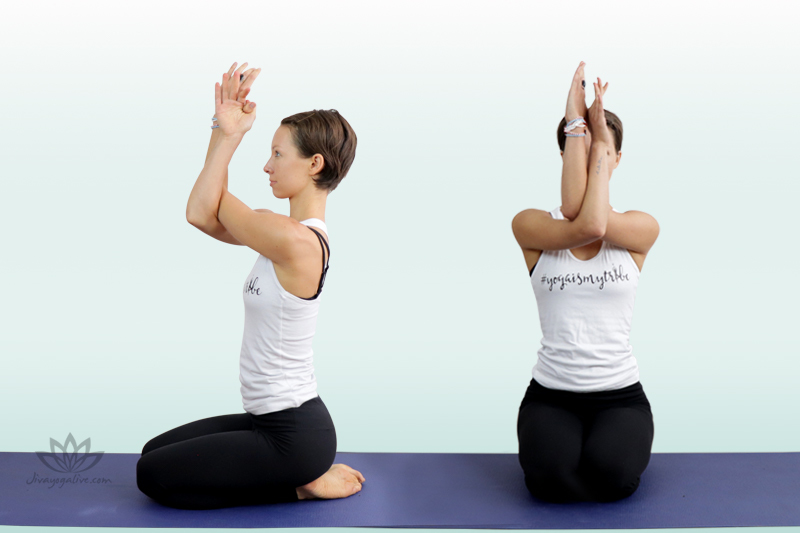
Eagle Pose Variation  – Garudasana 

Return to sitting on the knees and heels. Inhale the arms wide into a T position, exhale and cross the arms in front of the chest, left arm over right. Bend the elbows and hook thumbs together allowing the forearms to connect. Lift the hands toward the sky, feeling the stretch in the back of the neck and shoulders. Breathe here. Uncross the arms, inhaling again to a T shape and exhale cross the arms again, this time bringing the right arm over the left. Hook the thumbs, raise the hands, and breathe again, creating space with each inhalation and finding release and ease with each exhalation. After a few breaths, release the posture.

Eagle Arms - Garudasana

Half Lord of the Fishes Pose  – Ardha Matsyendrasana 

Come into a seated position, sit bones on the floor and legs extended in front of the body. Flex the feet and acctivate through both legs. Make the spine tall. Bend the right knee bringing the right heel parallel with the left knee. Inhale the right arm over head and exhale bring it behind the body, pressing the palm into the ground and the arm against the back body for support. Inhale the left arm over head and exhale, bend the left elbow as it crosses over to the outside of the right knee. Tuck the navel into the spine and twist from the lower abdomen. Press the elbow and knee into each other and turn the gaze over the right shoulder.

With each inhale think about lifting the spine, with each exhale think about opening through the chest and right shoulder. On an exhale, unwind releasing the posture. Change the legs, extending the right and bending the left. Repeat the posture on the left side.

Half Lord of the Fishes - Ardha Matsyendrasana

Camel Pose – Ustrasana  

Come into Easy Pose. Inhale both arms above the head and exhale bring fingertips to tops of shoulders. Ground through sit bones, open through chest. Inhale and with the exhale quickly twist the whole torso and gaze to the right. Inhale quickly unwinding to center and carry the movement across on the exhale, twisting to the left. Continue this movement for twenty exhales, maintaining momentum and the same pace for each breath.

The focus of the breath should be on the exhale, the inhale will occur naturally as the body unwinds back to center. This breathing practice helps open the whole spine and move breath and prana throughout the entire torso.

Camel Pose – Ustrasana  

Camel Pose - Ushtrasana

Kundalini Pranayama – Side Twists 

Come into Easy Pose. Inhale both arms above the head and exhale bring fingertips to tops of shoulders. Ground through sit bones, open through chest. Inhale and with the exhale quickly twist the whole torso and gaze to the right. Inhale quickly unwinding to center and carry the movement across on the exhale, twisting to the left. Continue this movement for twenty exhales, maintaining momentum and the same pace for each breath.

The focus of the breath should be on the exhale, the inhale will occur naturally as the body unwinds back to center. This breathing practice helps open the whole spine and move breath and prana throughout the entire torso.

Kundalini Pranayama side twists

Featured Video: 7 Neck and Shoulder Yoga Poses For Instant Pain Relief

 Yoga for Neck and Shoulder Pain Relief

To begin reconditioning the body with better posture, start by finding more mobility in the neck and shoulders. This helps loosen up the muscles, thus relieving tension, and with consistency of practice, will lead to a greater range of motion. Having more range of motion and strength in the muscles are keys to creating good posture to support the body. Before jumping into any deep stretches in this area, start by working out a little tension and creating a little space with simple warm ups. An easy way to warm up the area is to take a minute or two doing some gentle neck and shoulder rolls. Take semi-circles with the neck, leading the motion from the tip of your nose in order to protect the neck from hyper-extension. Hunch the shoulders up and down and alternate rolling them forward and then backward. Keep in mind that you can always incorporate this into postures like Cat and Cow, Downward Facing Dog, Reverse Prayer, or any stabilized posture that allows you to safely find organic movement in your neck and shoulders. If you spend many hours at a desk, computer, in a vehicle, etc., try giving yourself some moments throughout the day to open this space a little. It will relieve tension and allow the body to release stress and pain.

Yoga for Upper Back and Neck Pain 

For upper back and neck pain, especially pain coming from posture, finding that happy balance between flexibility and strength is key. There are many postures that give us the option to explore these benefits in a way that meets us wherever we are in our practice, whether we’ve just begun our first yoga classes, or we’re half-way to enlightenment. Cobra and Child’s Pose are two of my favorites that offer this range of depth.Cobra Pose, Bhujangasana, is practiced on the floor, so right from the get-go we have the benefit of the ground right below us supporting this posture. (Remember Newton’s third law and don’t forget to use the energy of the ground in your postures!) The movement of Cobra stretches from the lower abs and hip flexors to the chest, the upper back and into the neck. By pushing into the earth and keeping the elbows tucked close to the body, we build strength in the muscles of our arms, back and chest and shoulders. This “baby backbend” is so good for opening and strengthening the upper body.Counter your Cobra Pose with restorative Child’s Pose, Balasana. This is a very gentle, semi-inversion that lowers the heart rate and calms the nervous system, allowing the mind to become calm and the body to relax. Not a bad complement to relieving painful tension. For an active experience in this posture, keep the arms lifted away from the ground and breath deeply, extending from the tailbone to the crown of the head.

Healing Your Neck and Shoulders After Pain

Exploring modifications of poses is one of the best ways to bring more healing into your yoga practice. There is so much respect and wisdom that comes from honoring the body where it is, rather than forcing it to where it “should” be. Don’t be afraid to have props on standby when you go to a studio class. If you don’t have blocks, bolsters and straps at home, get creative with books, blankets and scarves! Matsyasana, Fish Pose, is a beautiful and highly beneficial posture for neck and shoulder pain. None of this is lost when practiced with the support of a block or two. Placing a block between the space of the shoulder blades allows the chest to lift and the shoulders to stretch and open. Support from the block alleviates stress in the neck if your muscles are not yet strong enough to hold the backward extension on their own. If you are practicing with a migraine or neck injury, definitely support the head with a block, rather than dropping it entirely to the floor.This supported Fish Pose opens the lumbar, thoracic and cervical spine, conditioning the body for better posture. It also opens the chest, the heart space, physically and energetically, which is so critical for the process of healing. This healing posture gets its name from the incarnation of Lord Vishnu as the fish, Matsya, who came to Earth during a time of extreme corruption. A flood was filling the planet, purging it from the excessive evil. In order to preserve goodness and balance, Matsya saved the sages of the earth, protecting their wisdom and knowledge for new generations.As you practice this pose and breathe space and healing into your body, connect to the innate wisdom of your body as a self-healing machine and the wisdom that has been carried through generations of yogic tradition. 

How Yoga Can Help Shoulder Blade Pain

For relieving pain and tension in the upper body, Child’s Pose is an anytime, anywhere go-to pose. If you want to take it a little further to get deeper into your shoulder blades, thread the needle pose is a great variation to practice.The restorative nature of this posture is already great for relaxing the parasympathetic nervous system, allowing both the mind and body to find stillness. The twist of the torso and extension of the raised arm helps you to find a deeper stretch in the back of the shoulder blade, the chest and in the neck. From the rotation you can also feel the release of some tension in the lower back. Vinyasa teacher Jason Crandell writes, “Yoga is the perfect opportunity to be curious about who you are.” I love that and couldn’t agree more. I encourage you to see your practice as an opportunity to explore who you are and who you could be, and practice letting go of any “should bes”. Allow your healing process to unfold without force, to blossom. Be curious in your poses, in your mind and with your spirit. May you be well!

Conclusion

Finish the practice by coming into Savasana and allow the body to relax completely, letting go of control of the breath. Hopefully this flow has helped to release any excess tension of stress that’s been held in the neck and shoulders.

The chest and upper back should feel much more open and the posture of the torso overall should feel more lifted and straightened. Try practicing these postures every day to relieve stiffness and pain and to improve your posture.

About

Hillary

Hillary is a natural-born wanderer and wonderer. A digital nomad and pilgrim of the heart, she often feels herself a poster child of the Spiritual Millennial. As a writer, health coach and yoga instructor Read More..

GERD and Yoga: Reduce Reflux Symptoms with Mindful Breathing and Movement

To breathe, is to live, and by learning breath control exercise we reduce anxiety, stress and invite better sleep, energy and focus into our practice and into our daily life.

GERD and Yoga: A Natural Path to Relief

We are currently facing a widespread issue of digestive disorders, and GERD and yoga is a combination more people are turning to for relief. With modern lifestyles pulling us away from natural habits—due to poor diet, exposure to toxins, and constant stress—conditions like GERD are becoming all too common. GERD, or Gastroesophageal Reflux Disease, can be extremely uncomfortable and often leads people to seek pharmaceutical solutions.

However, yoga offers a natural, supportive approach. This article introduces a yoga for GERD flow sequence designed to reduce symptoms while calming the mind and restoring digestive balance.

What is GERD?

GERD stands for Gastroesophageal Reflux Disease. It occurs when stomach acid flows back into the esophagus, causing a burning sensation in the chest or throat, often referred to as acid reflux or heartburn. Instead of jumping straight to medication, incorporating yoga for GERD into your routine can help treat this condition holistically.

How Yoga Supports Digestive Health

Practicing yoga and conscious breathing stimulates the parasympathetic nervous system, also known as the “rest and digest” mode. This encourages better digestion, reduces inflammation, and helps move food efficiently through the digestive tract. Consistent practice can reduce the frequency and severity of GERD symptoms.

Gerd and Yoga Poses to Help – Infographic

yoga for gerd infographic       gerd and yoga

(Top 5 Yoga Poses For Gerd)

Cat Pose – Marjariasana 

Push down into the palms and round the upper back to settle into Cat Pose. Be as dramatic as you can be, puffing up through the shoulder blades with the chin down to the chest. Draw the navel to spine and send your awareness and breath to the core.

Cat Pose increases flexibility of the neck, shoulders, and spine and is a great pump for the digestive system as it massages the internal organs.

cat pose           gerd and yoga

Downward Facing Dog – Adho Mukha Svanasana 

Tuck the toes, send the hips high and push back into Downward Facing Dog.

Downward Facing Dog as a follow up to Cat Pose is an opportunity to release any tension in the belly, while stretching the body from feet to hands.

downward facing dog pose        gerd and yoga

Extended Child’s Pose – Balasana

Drop the knees as wide as your mat, bring the big toes together to touch and sit the hips back on the feet. Allow the belly to fall in between the space of the thighs. Forehead comes down to the mat and extend the arms pressing down into the palms.

When working with digestive disorders, you want to take the knees wide in your Extended Child’s Pose, so that the belly can really hang down. Send the breath down into this space and let it be soft and relaxed.

extended child pose

Half Lord of the Fishes – Ardha Matsyendrasana 

Extend the right leg along the mat, bend the left knee up and bring the left sole of the foot across. There is option to bend the bottom knee to stack the knees or you can leave this leg extended. Take the left hand behind to the base of the spine and the wrap the right elbow around the left knee. Twist to the left, opening the chest, the neck, the head. You can even turn the gaze to stretch the eyes. Repeat on the other side.

Twisting the abdomen is great for digestive discomfort, as when you release the pose you are sending a fresh rush of blood into the area and boosting circulation and purification.


4 half lord of the fishes pose 2

Wind Relieving Pose – Pavana Muktasana

Come down onto your back and bring the knees into the chest. Lift the shoulders up off the earth, wrap the arms around the knees and squeeze the knees together. Draw the thighs down into the belly. Rest the shoulders and the head back down on the mat, slightly tucking that chin.

Another great opportunity to compress the digestive organs and work with the breath. With each exhale  pull the thighs down to massage the belly.

wind relieving pose

Featured Video: Gerd and Yoga Poses

Pranayama for Acid Reflux

The more commonly known benefits of Breath of Fire Pranayama are the cleansing effects it can have and the increase in energy and heat in the body. What is not such common knowledge however, is the power of this Pranayama against severe symptoms of GERD and acid reflux. A 2013 study on the effects of yoga and conscious breathing, reported that regular practice can control and/or alleviate symptoms related to digestive diseases! Breath of Fire – Kapalabhati PranayamaAlso known as the Skull Shining Breath as it is thought to purify and rejuvenate the mind and body. This Pranayama can be practiced ten times, in rounds of three or four. Directions Find a comfortable seat either cross legged on the floor or on a chair with the soles of the feet connecting to the earth. Brings the hands to the belly.

Inhale through the nose and fill the belly with your breath. Vigorously through the nose and draw the naval back to the spine.  Continue to breathe like this, focusing on the exhales and sucking the belly back. The inhales will come naturally.

Can Yoga  Help Bile Reflux?

Bile reflux is a disorder where the bile from the small intestine flows up and into the stomach and esophagus. There are a number of reasons why you could be suffering, including having a diet that is too high in fat! One of the functions of the liver, is to release bile when fat is detected, even in small amounts. So an excess amount in your food choices could be the culprit.

Stress has also been identified as being a major contributor and so this is where yoga can come in. Whatever the cause of your distress; when symptoms are severe they can include heartburn, nausea, and vomiting bile. Yoga can offer you a more natural way to soothe the body. Try these three poses to find some relief.Seated Forward Bend – Paschimottanasna Any pose that compresses the belly, is great for working into the abdomen, as it encourages the movement of stagnant energies. For treating bile reflux I recommend to close the eyes and really drop into the belly. It is important that you only come as far into this fold as is comfortable and allow the breath to guide you deeper.Camel Pose – UshtrasanaCamel Pose is very stimulating for the abdominal organs and encourages blood flow to this region. Work slowly towards the full expression, moving cautiously and listening to the body. Diamond Pose – VajrasanaThis pose is a common asana for tackling digestive woes; it’s thought to be effective means of boosting digestion after a meal. It is very easy on the body and has a calming effect on the mind. You can spend as long as you have here, taking steady, even, natural breaths. Come out of the mind and away from worries about your reflux and let the breath be your anchor into the body.

Yoga For Strong Oesophagus

The throat and the esophagus is often overlooked. However, its role in the body is critical, as it is the beginning of the GI tract. It is also an integral part of the throat chakra and an area that is subject to both physical and emotional strain. This Chakra is our communication center and influences how we express ourselves, as well as how we able to listen and make decisions. These three poses work to activate and stimulate this area!Plow Pose – HalasanaSend you awareness into the compression of the throat and allow this area to be soft and relaxed. As the neck compresses, the back of the neck is being opened and you are working to squeeze out any negativity. Shoulderstand – SarvangasanaHere you have an opportunity to reverse circulation and send fresh blood to the throat! It is a powerful pose for igniting your throat Chakra, but it also stimulates the thyroid gland. As you hang out here you are not only strengthening the legs, core and bum, but you are also opening the shoulders and neck. Half Lord of the Fishes – Ardha MatsyendrasanaAlthough there is a lot of focus on the twisting going on at the core here, there is also the opportunity to really open the throat in your Half Lord of the Fishes Pose. You’re also stretching the side body, upper back and neck.

CONCLUSION

GERD and other gastrointestinal disorders are extremely common today as a result of years of poor food choices, an accumulation of toxins, excessive alcohol consumption and high stress levels.  It is therefore important that we have access to natural healing protocols so as to avoid having to take over the counter drugs.

Yoga is a great tool to help relieve digestive discomfort during times of distress. At the same time is can strengthen abdominal functioning in order to prevent further flare ups. The key is to practice with consistency, so including these yoga for gerd asanas into your daily practice will have profound effects over time on overall digestion.

About

Charlie Hanna

Charlie is a Yoga Alliance certified Hatha, Yin Yoga & Meditation teacher with a psychology degree in her back pocket. She is currently on a mission, chasing sun and Read More..

Ready to take your healing further? Click here to access yoga courses for GERD relief and and start your journey toward lasting wellness today.

Yoga For Disc Problem

In Traditional Chinese Medicine it is said that a healthy spine is the secret to a long life. While yoga as exercise is great for conditioning strength and flexibility in the back, it can also be extremely therapeutic for individuals suffering from chronic or acute pain in the spine. When practicing with injury or pain it is especially important to know how to safely practice postures in a way that nourishes the body and avoids any additional agitation. This video teaches you how to safely practice postures that strengthen and support the spine without irritation to existing disc problems. Practicing these postures regularly will help alleviate pain and prevent future injury.

Often, what we feel in one area of our body will result in sensations elsewhere in the body. Obviously, this makes sense, since the body is a machine of many parts working together as one, but as we all know, figuring out which sensation is the source of another is not often so obvious. Frequent headaches, for example, can seem like an isolated problem of its own, but, in fact, almost never is. No smoke without fire, right? One of the most common causes of frequent headaches is simply poor posture. When the head is constantly pulled forward, it strains the neck and the jaw causing headache-inducing tension. As you can imagine, or perhaps already know, yoga can be truly magical for improving posture. Consequently, it stands to improve headaches and migraines as well. Researchers in this study concluded that in addition to conventional treatment, yoga therapy notably helped patients to reduce the frequency and intensity of migraines.Personally, I come from a military family, grew up taking dance classes and began my yoga practice early in college, so good posture has been reinforced throughout my entire life. I’m very lucky that it’s something my body has learned to do well, but for sure there are times when it forgets. This happens when something out of the ordinary is changing my regular habits, like spending lots of time reading on vacation, or too much time looking down at my phone/book/journal on a day of traveling from flight to flight. In these instances it’s extremely obvious for me that the pain and tension I begin to feel is coming from extended time in these hunched posturesThe American Council on Exercise praises yoga’s effectiveness for improving posture, explaining that the practice “massages the skeletal system, which supports bone mass and growth, while reducing tension in the supporting muscles and tendons.”If you find yourself suffering from frequent headaches, especially if you often have pain or tension in your neck and shoulders, see how your posture is looking these days. It could be time to bring a new intention to your yoga practice and get your posture into a proud and healthy position.

childs pose vector

TRAINING TYPE: FLOW SEQUENCE

CATEGORY:YOGA

SUBCATEGORY:RECOVERY 

 PLANNED TIME:15 MIN 

LEVEL:ALL LEVELS  

PROPS:NONE

 20 Minute Restorative Yoga Flow For Neck Pain and Headaches

 This restorative flow for neck pain and headaches will cover a sequence of seven poses that will leave you feeling open and relieved in your neck and shoulders. These poses focus on opening through the upper back and neck in order to release tension and pain. These stretches can accommodate any level of practice from beginner to advanced yogi. This flow is perfect for relieving pain from poor posture, time spent over a desk or device, and residual soreness from other physical activities. For those suffering from chronic pain in the neck and shoulders, practicing this sequence daily will maximize the benefits of the postures. No props are needed for this sequence and it’s perfect for practicing anytime, anywhere!

Yoga For Neck and Shoulder Pain Infographic

yoga poses for neck and shoulder pain infographic

Easy Pose – Sukhasana

Starting from an easy sitting posture, we’ll begin this practice by warming up the neck and shoulders with some gentle rolling movements. With the hands resting gently on the knees, raise the shoulders towards the ears and roll the shoulder blades down the back. Continue this movement while breathing into the space at the base of the neck and between the shoulders. After a few breaths, reverse the direction and continue the same movement in the forward direction.

From Easy Pose, make sure the spine is tall with heart over hips and head over heart. Breathe deeply from the base of the spine all the way to the crown of the head. Exhale and follow the nose down toward the chest. Inhale and follow the nose toward the sky. Exhale the nose back down toward the chest and continue the flow matching your breath with each movement allowing space to open in the back of the neck.Return the gaze to neutral, inhale. Exhale turn the gaze over the right shoulder. Inhale back to center, exhale look over the left shoulder. Continue inhaling back to center and exhaling over the shoulder for a few breaths.

Coming back to neutral in the center, inhale and exhale drop the right ear to the right shoulder. Inhale to center and exhale the left ear to the left shoulder. Continue this for a few breaths, making sure to focus the breath on expanding the space in the neck and tops of the shoulders.

easy pose sukhasana

Thread The Needle Pose –  Parsva Balasana 

Come into a table top position, perhaps taking a moment to move through a few cat/cows and when you’re ready, open the right hand up towards the sky allowing the gaze to follow and opening across the chest and through the back of the right shoulder. Exhale, return the right hand to the mat, palm spread wide. Inhale, repeat by opening on the left side. Exhale the left hand back to the mat. Inhale the right arm up, open through the chest.

Exhale, bring the right arm down and “thread” underneath the left arm as the hips sink back to heels. Let the right arm, shoulder and cheek rest against the mat. Breathe deeply here into the shoulder blades and neck, keeping the left arm active and palm wide. Breathe. On an inhale, unwind, exhale return to table top. Inhale the left arm up, exhale “thread” the left hand under the right arm and repeat on this side. After a few breaths, return to Table Top.

Thread the Needle Pose - Parsva Balasana

Rabbit Pose – Sasangasana 

Come to a kneeling position with toes tucked under the glutes. Inhale and reach both hands behind the body to cup the heels with thumbs on the outside of the foot. Exhale the chin towards the chest and fold forward bringing the crown of the head to the floor with the forehead coming as close to the knees as comfortable. Inhale and lift the hips to the sky allowing the arms to extend. Breathe deeply into the back body, especially focusing on the thoracic spine. Be careful not to place too much weight on the head. Allow the legs to support the posture. Release the posture by lifting the head and rolling the torso up one vertebrae at a time. 

Rabbit Pose - Sasangasana

Eagle Pose Variation  – Garudasana 

Return to sitting on the knees and heels. Inhale the arms wide into a T position, exhale and cross the arms in front of the chest, left arm over right. Bend the elbows and hook thumbs together allowing the forearms to connect. Lift the hands toward the sky, feeling the stretch in the back of the neck and shoulders. Breathe here. Uncross the arms, inhaling again to a T shape and exhale cross the arms again, this time bringing the right arm over the left. Hook the thumbs, raise the hands, and breathe again, creating space with each inhalation and finding release and ease with each exhalation. After a few breaths, release the posture.

Eagle Arms - Garudasana

Half Lord of the Fishes Pose  – Ardha Matsyendrasana 

Come into a seated position, sit bones on the floor and legs extended in front of the body. Flex the feet and acctivate through both legs. Make the spine tall. Bend the right knee bringing the right heel parallel with the left knee. Inhale the right arm over head and exhale bring it behind the body, pressing the palm into the ground and the arm against the back body for support. Inhale the left arm over head and exhale, bend the left elbow as it crosses over to the outside of the right knee. Tuck the navel into the spine and twist from the lower abdomen. Press the elbow and knee into each other and turn the gaze over the right shoulder.

With each inhale think about lifting the spine, with each exhale think about opening through the chest and right shoulder. On an exhale, unwind releasing the posture. Change the legs, extending the right and bending the left. Repeat the posture on the left side.

Half Lord of the Fishes - Ardha Matsyendrasana

Camel Pose – Ustrasana  

Come into Easy Pose. Inhale both arms above the head and exhale bring fingertips to tops of shoulders. Ground through sit bones, open through chest. Inhale and with the exhale quickly twist the whole torso and gaze to the right. Inhale quickly unwinding to center and carry the movement across on the exhale, twisting to the left. Continue this movement for twenty exhales, maintaining momentum and the same pace for each breath.

The focus of the breath should be on the exhale, the inhale will occur naturally as the body unwinds back to center. This breathing practice helps open the whole spine and move breath and prana throughout the entire torso.

Camel Pose – Ustrasana  

Camel Pose - Ushtrasana

Kundalini Pranayama – Side Twists 

Come into Easy Pose. Inhale both arms above the head and exhale bring fingertips to tops of shoulders. Ground through sit bones, open through chest. Inhale and with the exhale quickly twist the whole torso and gaze to the right. Inhale quickly unwinding to center and carry the movement across on the exhale, twisting to the left. Continue this movement for twenty exhales, maintaining momentum and the same pace for each breath.

The focus of the breath should be on the exhale, the inhale will occur naturally as the body unwinds back to center. This breathing practice helps open the whole spine and move breath and prana throughout the entire torso.

Kundalini Pranayama side twists

Featured Video: 7 Neck and Shoulder Yoga Poses For Instant Pain Relief

 Yoga for Neck and Shoulder Pain Relief

To begin reconditioning the body with better posture, start by finding more mobility in the neck and shoulders. This helps loosen up the muscles, thus relieving tension, and with consistency of practice, will lead to a greater range of motion. Having more range of motion and strength in the muscles are keys to creating good posture to support the body. Before jumping into any deep stretches in this area, start by working out a little tension and creating a little space with simple warm ups. An easy way to warm up the area is to take a minute or two doing some gentle neck and shoulder rolls. Take semi-circles with the neck, leading the motion from the tip of your nose in order to protect the neck from hyper-extension. Hunch the shoulders up and down and alternate rolling them forward and then backward. Keep in mind that you can always incorporate this into postures like Cat and Cow, Downward Facing Dog, Reverse Prayer, or any stabilized posture that allows you to safely find organic movement in your neck and shoulders. If you spend many hours at a desk, computer, in a vehicle, etc., try giving yourself some moments throughout the day to open this space a little. It will relieve tension and allow the body to release stress and pain.

Yoga for Upper Back and Neck Pain 

For upper back and neck pain, especially pain coming from posture, finding that happy balance between flexibility and strength is key. There are many postures that give us the option to explore these benefits in a way that meets us wherever we are in our practice, whether we’ve just begun our first yoga classes, or we’re half-way to enlightenment. Cobra and Child’s Pose are two of my favorites that offer this range of depth.Cobra Pose, Bhujangasana, is practiced on the floor, so right from the get-go we have the benefit of the ground right below us supporting this posture. (Remember Newton’s third law and don’t forget to use the energy of the ground in your postures!) The movement of Cobra stretches from the lower abs and hip flexors to the chest, the upper back and into the neck. By pushing into the earth and keeping the elbows tucked close to the body, we build strength in the muscles of our arms, back and chest and shoulders. This “baby backbend” is so good for opening and strengthening the upper body.Counter your Cobra Pose with restorative Child’s Pose, Balasana. This is a very gentle, semi-inversion that lowers the heart rate and calms the nervous system, allowing the mind to become calm and the body to relax. Not a bad complement to relieving painful tension. For an active experience in this posture, keep the arms lifted away from the ground and breath deeply, extending from the tailbone to the crown of the head.

Healing Your Neck and Shoulders After Pain

Exploring modifications of poses is one of the best ways to bring more healing into your yoga practice. There is so much respect and wisdom that comes from honoring the body where it is, rather than forcing it to where it “should” be. Don’t be afraid to have props on standby when you go to a studio class. If you don’t have blocks, bolsters and straps at home, get creative with books, blankets and scarves! Matsyasana, Fish Pose, is a beautiful and highly beneficial posture for neck and shoulder pain. None of this is lost when practiced with the support of a block or two. Placing a block between the space of the shoulder blades allows the chest to lift and the shoulders to stretch and open. Support from the block alleviates stress in the neck if your muscles are not yet strong enough to hold the backward extension on their own. If you are practicing with a migraine or neck injury, definitely support the head with a block, rather than dropping it entirely to the floor.This supported Fish Pose opens the lumbar, thoracic and cervical spine, conditioning the body for better posture. It also opens the chest, the heart space, physically and energetically, which is so critical for the process of healing. This healing posture gets its name from the incarnation of Lord Vishnu as the fish, Matsya, who came to Earth during a time of extreme corruption. A flood was filling the planet, purging it from the excessive evil. In order to preserve goodness and balance, Matsya saved the sages of the earth, protecting their wisdom and knowledge for new generations.As you practice this pose and breathe space and healing into your body, connect to the innate wisdom of your body as a self-healing machine and the wisdom that has been carried through generations of yogic tradition. 

How Yoga Can Help Shoulder Blade Pain

For relieving pain and tension in the upper body, Child’s Pose is an anytime, anywhere go-to pose. If you want to take it a little further to get deeper into your shoulder blades, thread the needle pose is a great variation to practice.The restorative nature of this posture is already great for relaxing the parasympathetic nervous system, allowing both the mind and body to find stillness. The twist of the torso and extension of the raised arm helps you to find a deeper stretch in the back of the shoulder blade, the chest and in the neck. From the rotation you can also feel the release of some tension in the lower back. Vinyasa teacher Jason Crandell writes, “Yoga is the perfect opportunity to be curious about who you are.” I love that and couldn’t agree more. I encourage you to see your practice as an opportunity to explore who you are and who you could be, and practice letting go of any “should bes”. Allow your healing process to unfold without force, to blossom. Be curious in your poses, in your mind and with your spirit. May you be well!

Conclusion

Finish the practice by coming into Savasana and allow the body to relax completely, letting go of control of the breath. Hopefully this flow has helped to release any excess tension of stress that’s been held in the neck and shoulders.

The chest and upper back should feel much more open and the posture of the torso overall should feel more lifted and straightened. Try practicing these postures every day to relieve stiffness and pain and to improve your posture.

About

Hillary

Hillary is a natural-born wanderer and wonderer. A digital nomad and pilgrim of the heart, she often feels herself a poster child of the Spiritual Millennial. As a writer, health coach and yoga instructor Read More..